-
Various prices
Pterocarpus soyauxii. Air and kiln dried.
All dimensions shown are in inches (length x square).
Wonderful bright red to deep orange coloured heartwood with dark streaks, pale cream sapwood. Heart dulls to rich deep brown on exposure to light.
Grain is fairly coarse and interlocking but cuts as though soft so is one of the easier African timbers to turn. Creates red dust however well cut. Sands and finishes to an excellent shine and depth, especially with lacquers and polishes.
Read our...
-
Various prices
Albizia Saman (syn. Samanea Saman; Pithecellobium Saman) also widely referred to as Raintree (Costa Rica)
Native to Central and South America
Colour tends to be a golden to dark brown, sometimes with darker streaks. Monkeypod is sometimes seen with highly figured curly or wild grain patterns. The grain is usually fairly straight but one can be surprised with and interlocked or waving grain.
Monkeypod is generally easy to turn.
The ‘spindle’ blanks are waxed end grain only.
Read...
-
Various prices
Parota, Guanacaste - Enterolobi Cyclocarpum
Native to Central America, Mexico and northern South America
Parota's heartwood is light to medium brown, sometimes with a reddish hue. Darker streaks of Brown are often present. Parota turns easily and finishes well.
Read our safety notice on timber allergies.Safety Notice
-
Various prices
Bobgunnia madagascariensis Air dried.
A rare find of quality FSC certified Pau Rosa spindle blanks from an ethical trade company in Tanzania.
New to supplying woodturners and in an effort to cut the timber to the last squeak, the natives have cut an eclectic range of sizes at odds with our usual sizes so we have listed them as they were sold to us rather than wastefully cut them down.
The timber varies from orange to reddish brown with darker brown streaks with a slightly coarse texture...
-
Various prices
Berchemia zeyheri. Part Seasoned.
All dimensions shown are in inches (length x square).
A rare and beautiful timber which turns like hard soap. Predominantly pink with fine streaks of pinky red which will darken with age.
Pink Ivory is the royal tree of the Zulus and legend has it that use by others than the Zulu Royal Family was punishable by death but the truth is probably that it was done to push the timber price up. Hopefully . . .
These blanks are from sustainable plantations so...
-
Various prices
...
-
Various prices
Entandrophragma cylindricum. kiln dried.
All dimensions shown are in inches (length x square).
An inexpensive mahogany type with a fine texture and sometimes interlocking or wavy grain.
Ideal where projects are to match mahogany furniture etc.
Used widely in furniture and joinery, Sapele turns well, albeit with a sneezy smell when freshly cut and sanded. Colour is usually an even reddish brown but sometimes with pale streaks of straw colour to add interest.
Stains up really well. Turns...
-
Various prices
Tamarindus Indica. Part seasoned.
All dimensions shown are in inches (square x thickness).
Mozambican grown Tamarind wood. A fantastic timber, with a small section of extremely hard heart wood which is brown to dark brown or purple uniformed, the outer paler wood must not be confused with sap wood as it makes up the bulk of the tree and is a creamy yellowish wood that is beautifully fractured and sometimes if you are lucky it may have a naturally occurring spalting which develops whilst...
-
Various prices
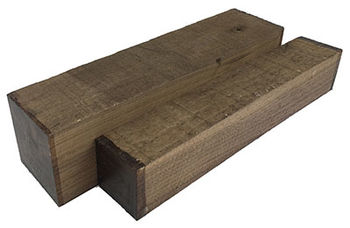
Juglans nigra. kiln dried.
All dimensions shown are in inches (diameter x thickness).
American Walnut, also known as Black Walnut.
The timber is usually steamed to spread the dark colour into the sapwood. The result can lighten the overall colour because it has been effectively diluted but overall, it is darker than English with the odd lighter streaks or even purple.
Like all walnuts, it is a kind, stable timber to turn and works to a marvelous finish with a pleasant aroma.
Oils will darken...
-
Various prices
Olea europaea subsp. cuspidata. Part seasoned. New stock for 2021
All dimensions shown are in inches (length x square).
South African grown Olive wood.
A fantastic timber, light brown with brown or black streaks and wild figuring in places, this wood can be highly fractured which gives great character. Olive turns very easily but the wood and shavings can be corrosive to steel. Cling Film on the chuck grip and a smear of oil on the bed bars is a good precaution.
These blanks are from...
-
Various prices
Microberlinia brazzavillensis. Air and kiln dried.
All dimensions shown are in inches (diameter x thickness).
Honey brown heartwood with streaks of black and brown showing the ‘zebra’ stripes on quartersawn timber.
A coarse grained timber with interlocking grain and the odd resin pocket in the stripes.
Coarse and hard to turn, but works to a spectacular finish.
Suited to oil or lacquer finishes, this timber is one of the most striking of the common exotic timbers.
Read our safety...
-
Various prices
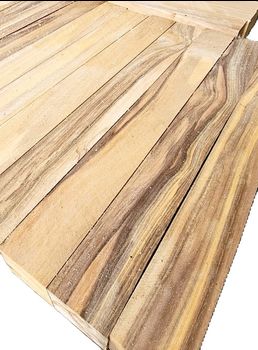
Breonadia Microcephala or commonly known as Matumi, a new timber to our range.
Air and Kiln Dried, Matumi is a tight grained timber which varies from honey brown to brownish grey with dark streaks and some wide lines. Similar to Goncalo Alves, if you know this timber, it turns tight and can take fine detail bit the wood is waxy to the touch which helps with turning but can clog abrasives. May not be suited to oil finishes but takes sealers well with wax on top.
NB Current stocks are part...
-
£9.02
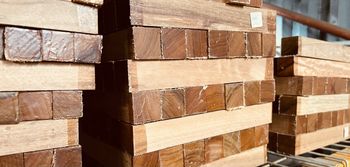
Eucalyptus paniculata, commonly known as grey ironbark, is a species of tree that is endemic to New South Wales. It is however grown in Southern Africa as a plantation species and is also considered an invasive species in the wild and it has many uses.
Grey Iron Bark is a very dense timber, being 1120 kilograms per cubic metre.
Heart wood is red-brown or dark brown.
The timber has various uses, including railway sleepers, heavy engineering, construction, poles and cross-arms, outdoor...


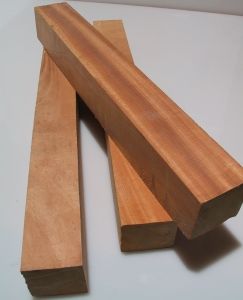
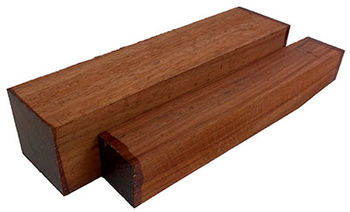 Various pricesPterocarpus soyauxii. Air and kiln dried.
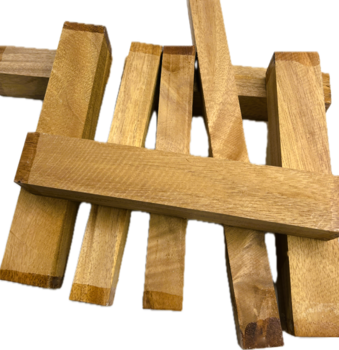 Various pricesAlbizia Saman (syn. Samanea Saman; Pithecellobium Saman) also widely referred to as Raintree (Costa Rica)
 Various pricesParota, Guanacaste - Enterolobi Cyclocarpum
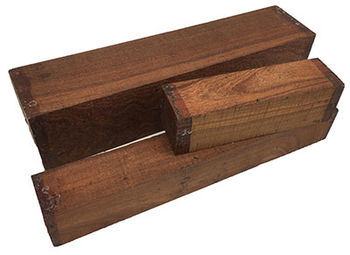 Various pricesBobgunnia madagascariensis Air dried.
 Various pricesBerchemia zeyheri. Part Seasoned.
 Various prices...
 Various pricesEntandrophragma cylindricum. kiln dried.
 Various pricesTamarindus Indica. Part seasoned.
 Various pricesJuglans nigra. kiln dried.
 Various pricesOlea europaea subsp. cuspidata. Part seasoned. New stock for 2021
 Various pricesMicroberlinia brazzavillensis. Air and kiln dried.
 Various pricesBreonadia Microcephala or commonly known as Matumi, a new timber to our range.
 £9.02Eucalyptus paniculata, commonly known as grey ironbark, is a species of tree that is endemic to New South Wales. It is however grown in Southern Africa as a plantation species and is also considered an invasive species in the wild and it has many uses.